Devlog
A real-looking Delhi: how Chalo Jantar Mantar's city got real walls, glass towers and trees

Sandeep Sahu
· 7 min read
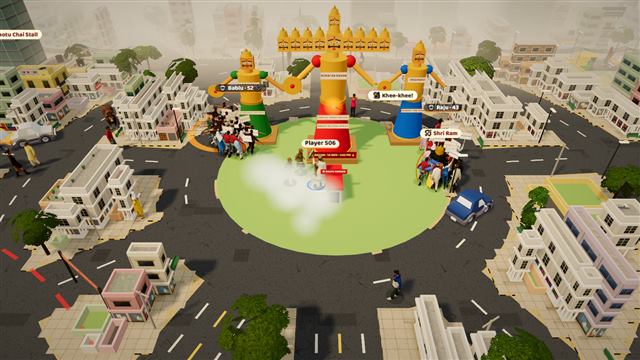
On 14 November the city of Chalo Jantar Mantar changed. The blocks of flats now have plaster and brick walls in Delhi's colours, Connaught Place has white colonnades, red-sandstone sarkari buildings stand round Parliament, fifty glass towers rise east of CP, and the trees are neem, peepal, ashoka and gulmohar. Here is why I rebuilt the look of the city, how each part is made, and what stayed exactly the same.
Why the city had to change
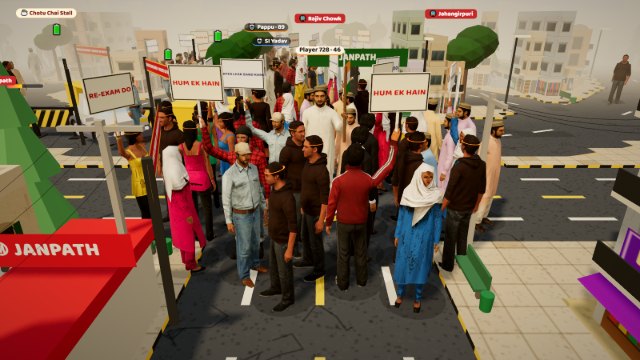
On 9 November the people of the game became real-looking: real faces, kurtas and dupattas, the police in khaki. The city around them stayed as it was. Players noticed straight away and told me plainly: the buildings looked bad. Next to the new people they looked like toys, and some asked for a city that looks like a real game, even a "smart city" of glass and steel.
They had a point. Every building was drawn by code alone: smooth walls in soft colours with the windows painted on. Fine next to cartoon figures, but next to a real face it looked like another game.
Real Delhi, with some glass
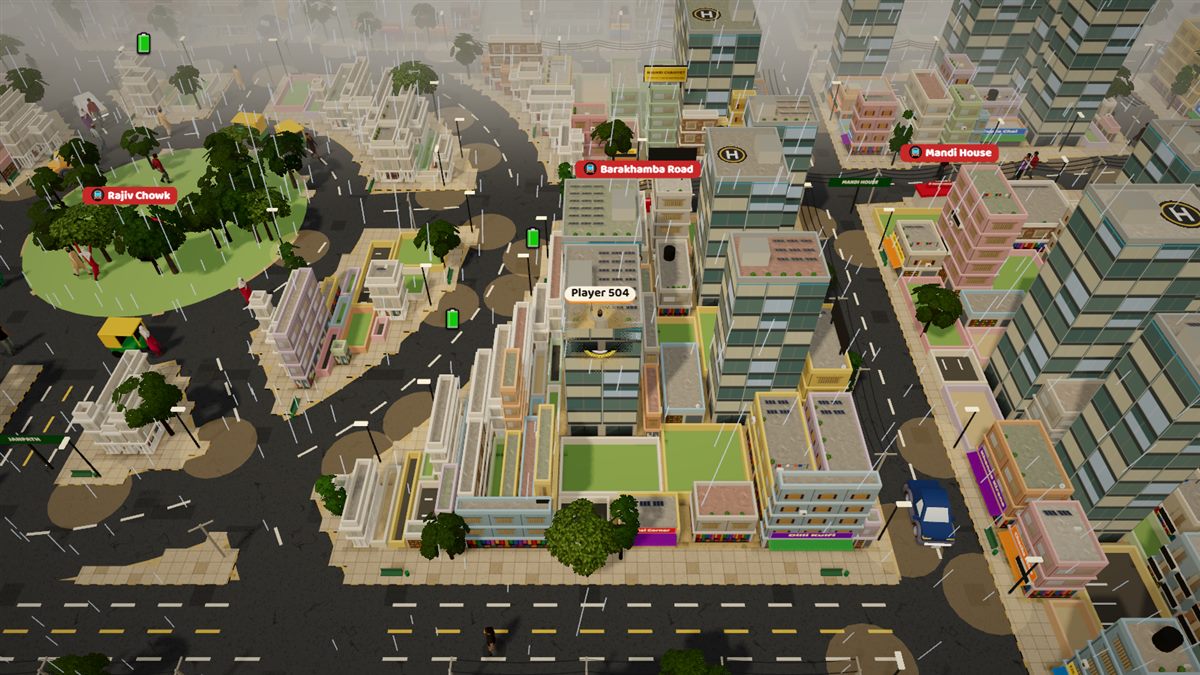
I had two ways to go: a shiny smart city, all glass, or Delhi as it really looks. A game called Chalo Jantar Mantar has to feel like Delhi, so I chose real Delhi plus some glass towers, and put the towers where the city has its office blocks: east of Connaught Place, around Barakhamba Road.
Every building plot now has a kind, picked from where it stands: a block of flats, a block in bare brick, a CP block, a sarkari building or a glass tower. Of the city's 1,082 buildings, 50 are now glass towers, 64 are CP blocks and 157 are sarkari buildings; the rest are flats, 112 of them in bare brick. It is the same city every time you load the game, on every phone and computer.
Walls and roofs from real photos
The biggest change is not the shapes but the surfaces. The walls and roofs now use photographs of real surfaces from ambientCG, a free library of textures. I took six of them, used as plaster, old plaster, roof concrete, old brick, white stone and sandstone, made each one 512 pixels square and put all six side by side in one picture of about 325 KB. All except the brick are turned grey and evened out to one brightness, so each building's own colour can tint them: the same plaster photo becomes a yellow flat, a pink one or a sky-blue one.
The windows are still drawn by the game, on top of the photos: a window with a concrete chhajja and a steel grill, a balcony door with a railing, a wide sliding window, an old window with its wooden shutters open and an iron jaali. Brick walls get whitewashed window frames, CP gets tall white-framed windows between pilasters, and the sarkari buildings get deep windows in a sandstone surround with a stone jaali across them.
The photos load after the game starts. Until they arrive the walls are drawn the old way, then repainted, so nobody waits for them.
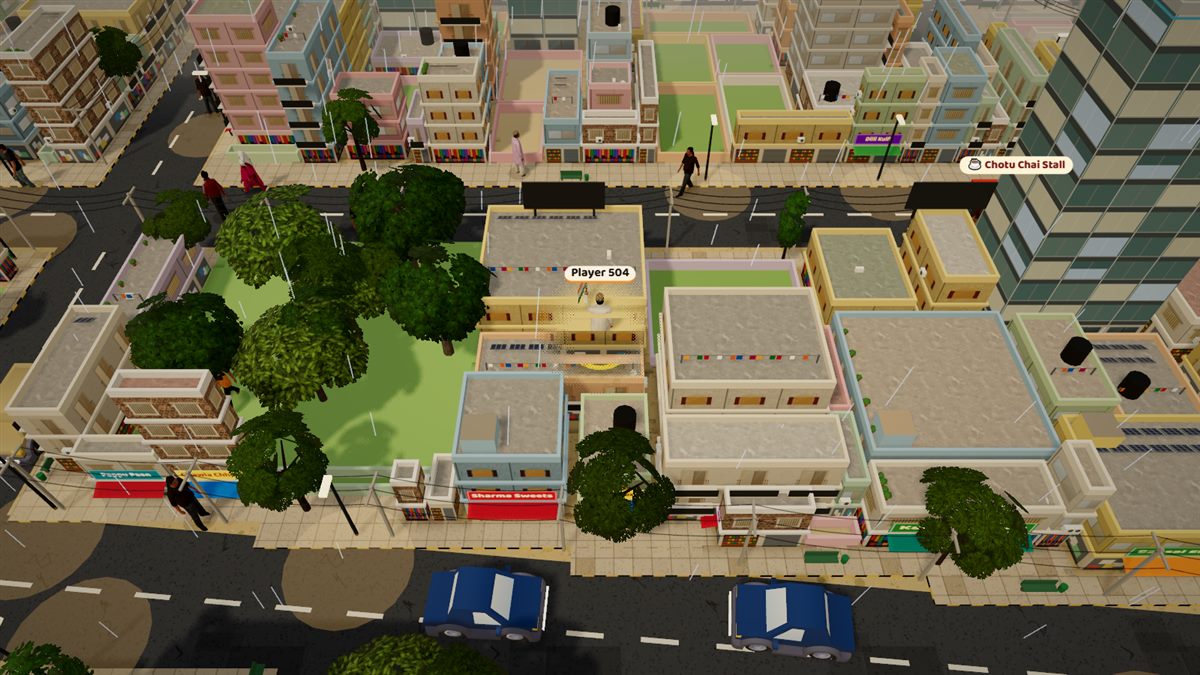
The flats are painted the way a Delhi street is: yellow, sky blue, pink, light green, peach and ochre, with whitewash, cream and cement grey between them, all a little faded.
Connaught Place and the sarkari buildings
Round Connaught Place the blocks are white and two or three storeys high, and their ground floor sits back behind a colonnade: a row of white columns along every side with a stone floor under them. The shop boards are still there, but there are no awnings, because the colonnade gives the shade.
Round Parliament and along Kartavya Path stand the sarkari buildings: two to four storeys of beige walls on a red-sandstone ground floor with deep arches, a sandstone cornice under the roof, and a small domed chhatri on each corner of the roof. They have no shops.
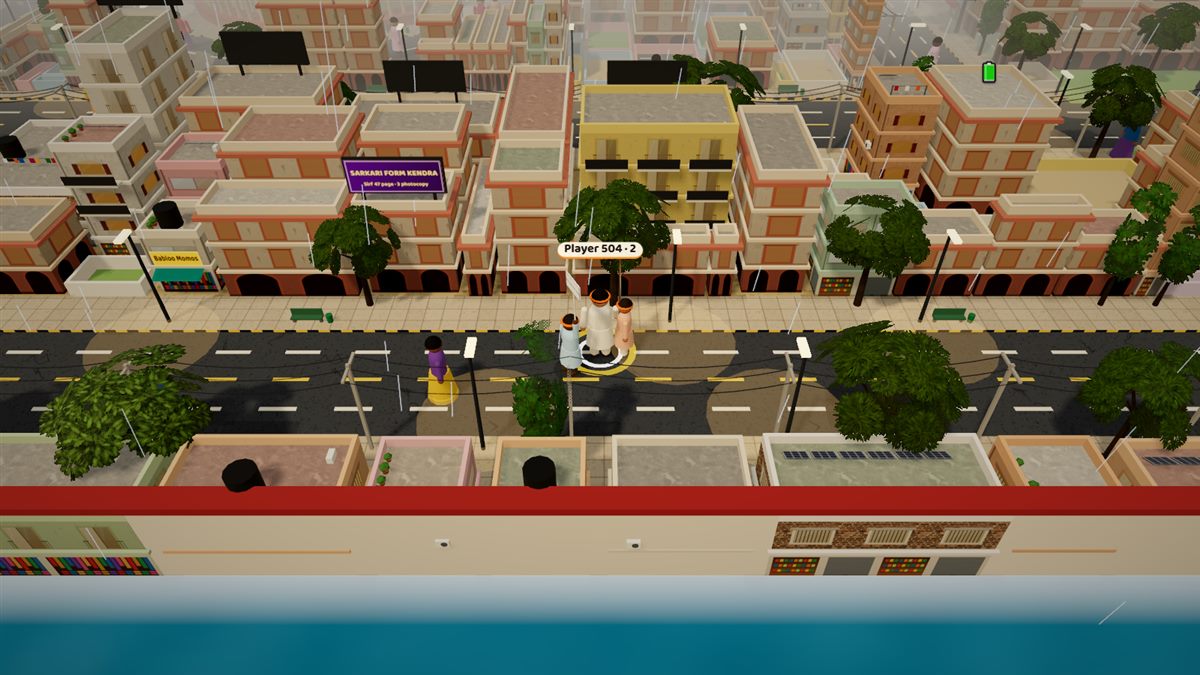
Fifty glass towers
The towers are 8 to 12 storeys high, most of them east of CP. Their glass works like a mirror, so the sky shows in it, and the panels differ a little in colour, as real ones do. On every roof there is a plant room, and then either a helipad or rows of solar panels with a small roof garden. After dark some offices are lit, some white, some warm, a few with the blinds half down, and a band of light runs round the top of each tower.
I kept the towers away from three places: the row along the city's edge, small plots, and the streets near Jantar Mantar, where they would hide the action.
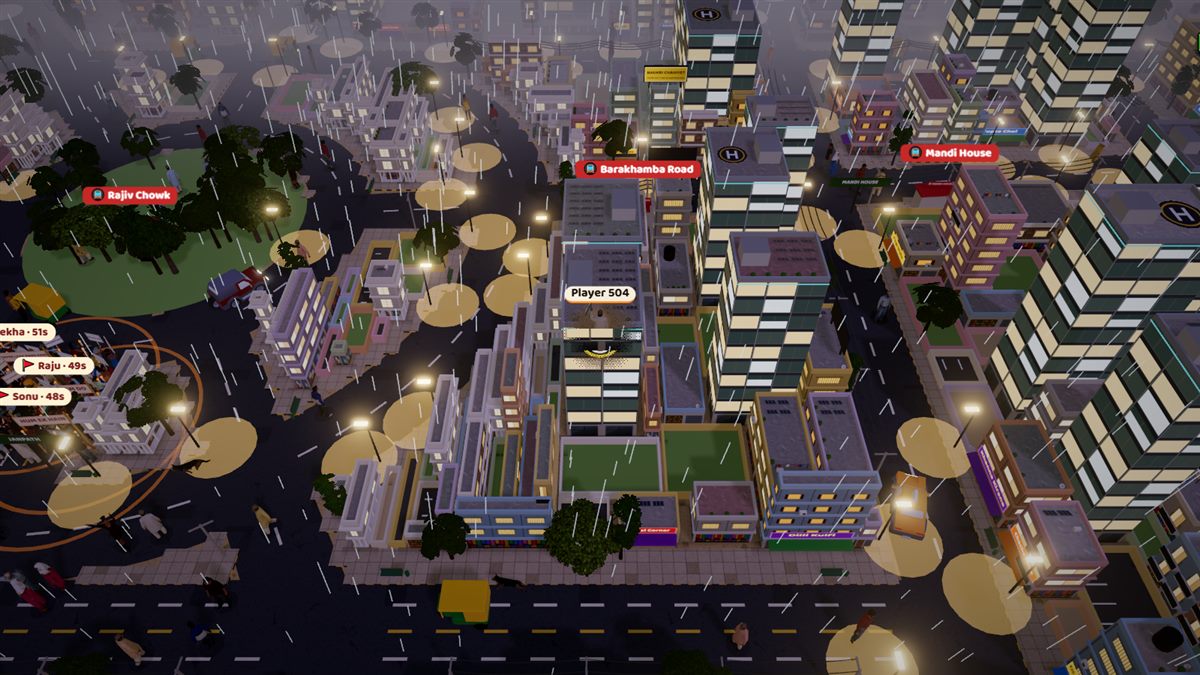
Busy roofs and soft shade
From the game's camera, the roofs are half of what you see. A Delhi roof is never empty, so now they have water tanks, solar panels, dish antennas, clothes drying on a washing line, potted plants along the parapet and AC units, a different mix on each roof. On Low graphics these small things are hidden, so older phones don't pay for them.
Two small touches make the buildings stand on the street instead of floating on it: the walls get a little darker towards the ground, and there is a soft shade on the footpath at every building's foot.
Neem, peepal, ashoka and gulmohar
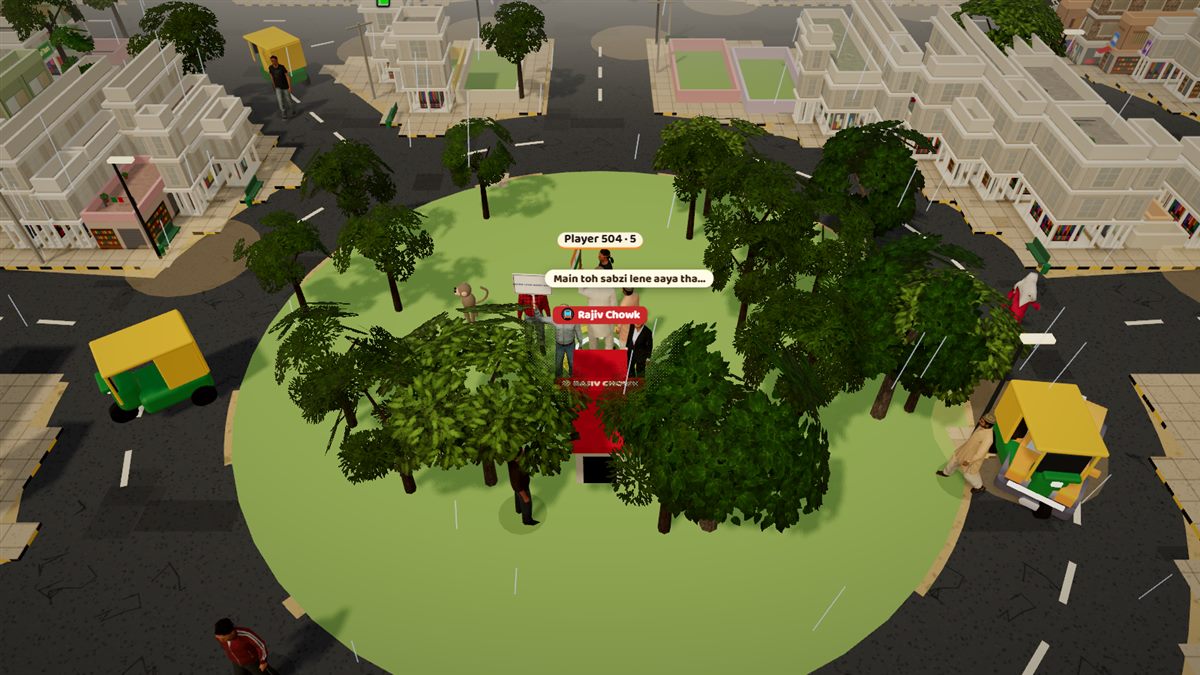
The old trees were simple round, faceted crowns. The new ones are four trees you see all over Delhi, standing exactly where the old ones stood. Along the roads most are neem, every fourth tree is an ashoka and now and then there is a gulmohar; in the parks, peepal, gulmohar and neem; inside the Jantar Mantar compound, neem and peepal.
Each tree is built the way bigger games build them: a bark trunk with a few branches, and a crown made of "leaf cards", small squares that each show a clump of real leaves, scattered through the shape of the crown. The leaves are photos from ambientCG too, a different leaf set for each kind, cut so only the leaves show. The ashoka is tall and narrow, the gulmohar flat and wide, the peepal paler in leaf and bark.
- The cards are lit as one soft, round crown, not as a heap of squares.
- The leaves sway a little in the wind (not on Low graphics).
- Their shadows on the road have the shape of leaves.
- They use fewer triangles than the old round trees, so a phone draws them more easily.
What stayed the same
Only the look changed. The roads, the lanes, the plots and Jantar Mantar are exactly where they were, and every building blocks you exactly as before. A building's height is only drawn on your screen; the game's rules never use it. Every route you know still works.
Tall towers did bring one problem: they can hide what is behind them. The game already cuts a round see-through hole in any building that stands between the camera and you. On a glass tower that hole is now 2.6 times wider, so you see your kafila and the street round you, not only yourself.
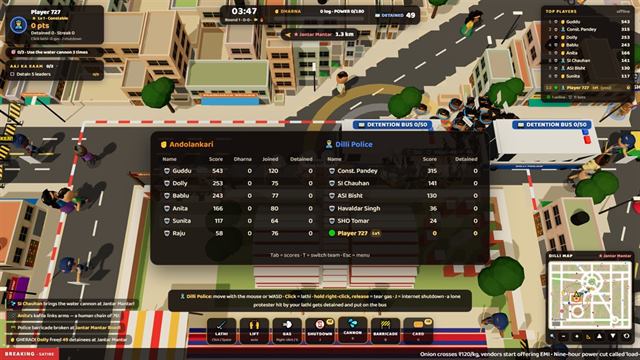
The same update cleaned up the phone screen: the Dilli map folds into a small 🗺️ Map pill with an arrow and the distance to Jantar Mantar, and slides out on a tap; today's tasks fold into a 📋 Tasks pill that shows how many you have done. More in the phone guide.
The old city is still in the game's code, so if the new one ever gives phones trouble, I can bring it back with one switch.
Credits
The photos of plaster, concrete, brick, stone, leaves and bark come from ambientCG, which shares them under CC0, free for any use. Everything built on them, from the window patterns to the colonnades, the chhatris and the roofs, I made myself in code. The people who now walk these streets have their own story in how the game got its new look, and the rest of the game in how I built it.