Devlog
Real-looking people in Chalo Jantar Mantar: how the game got its new look
Sandeep Sahu
· 6 min read
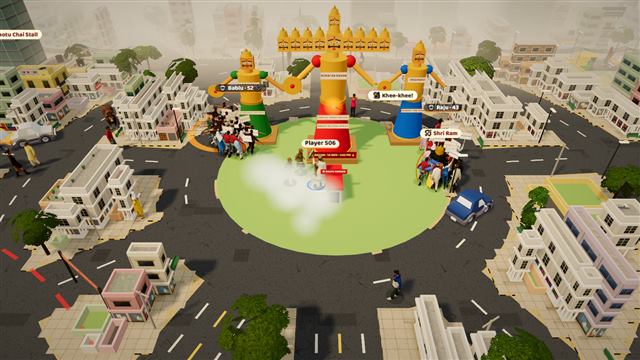
On 9 November the people of Chalo Jantar Mantar changed. The round-headed cartoon figures are gone; the kafila now has men in kurtas and checked shirts, women with a dupatta over the head, the police in khaki, and cows and a bull wandering the roads. Here is why I did it, where the new people come from, and the things I had to make myself to turn them into a Delhi protest.
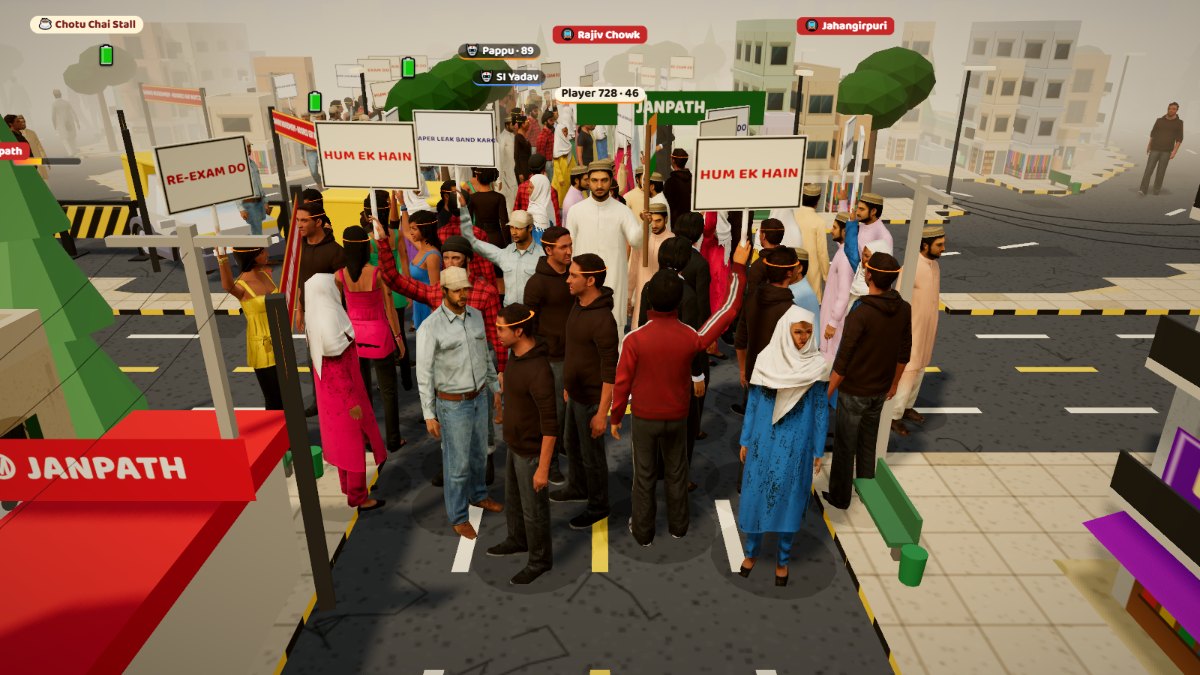
Why I wanted real-looking people
I started this update with the city: a new sky, better light and busier streets. When I looked at the game after that work, the people still felt the same: big round heads on small bodies. A protest game lives on its crowd, and mine looked like toys.
I wanted the people to look closer to the big battle games on our phones, with real faces and proper proportions, without copying any game's characters. I also had two rules: the people had to be free to use in a game that shows ads, and a phone had to be able to draw a thousand of them at once.
Where the new people come from
The people and the animals come from the Microsoft Rocketbox Avatar Library, a set of 115 rigged characters and a few hundred animations that Microsoft released under the MIT licence. That licence lets anyone use them, change them and ship them, as long as the copyright notice goes with them, so the game credits Microsoft on the creator page and the terms, with the full licence text next to the game's files.
From the library I picked the people who could be on a street near Jantar Mantar: a man in a white kurta-pyjama and topi, a man with a beard and a cap, men in a zip jacket, a track jacket, a checked shirt, a T-shirt, a plain shirt; women in a long kurta with a dupatta, in a top, in a cardigan, and in a jacket and skirt. Seven men, four women and a policeman make every crowd you see.
Making them look like a Delhi street
A library made for the whole world needs some changes before it looks like Delhi:
- The police wear khaki. The library's policeman came in a blue uniform with another country's flag on his shoulder. I turned the uniform and his cap khaki and painted over the patch, so the Dilli Police line looks like the one you would see at a real protest.
- A kurta can be any colour. The white kurta and the women's long kurta are marked cloth by cloth, so the game can dye them. Every person in a kafila gets their own colour, and the colour you pick in your look goes on your own kurta.
- Warmer faces. Many faces in the library are light. I made some of them a shade darker and warmer, so a crowd looks like people from here.
- Your own headwear on a real head. The Gandhi topi, the pagdi, the safa with its tail, the cap and the gamchha (round the neck, over the shoulder or tied on the head) were made again to sit on these heads and shoulders. And the flag you carry is now the tiranga.
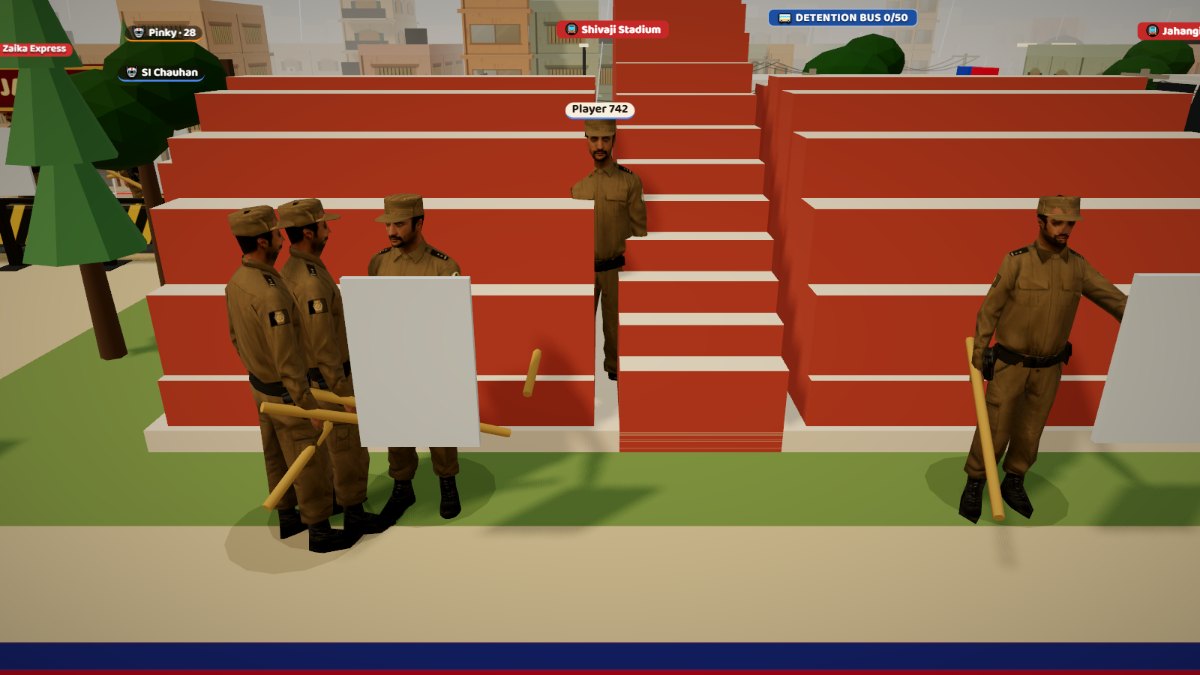
Teaching them to protest
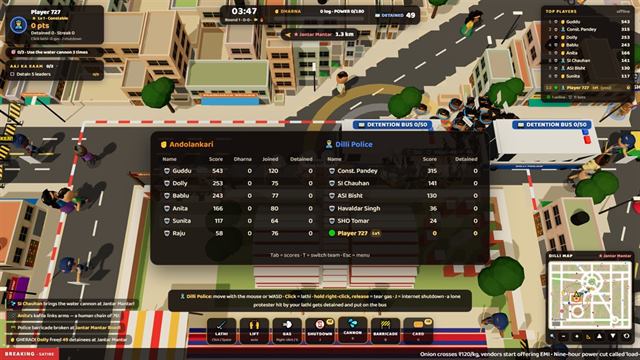
The library's people can walk, run, stand about, dance and sit on a chair. A protest needs more than that, so I made the rest by hand, bone by bone: the fist punched up for a naara, the lathi raised and brought down, sitting cross-legged on the road for a dharna, hands up when the police catch you, arms out for a human chain, a placard or a candle held up, and a shoulder against a barricade.
I also changed how all of it moves. A person now moves smoothly between the frames of each animation, and when they change from walking to running, or start a naara, the two blend for a moment instead of jumping. People lean a little into a turn when they run. You notice it most on your own character.
Cows, a bull and a dog
No Delhi road is complete without its animals. The game has brown and black cows, a bull, and a stray dog. The library gives animals no animation at all, so I wrote their walk, their run, the swish of a tail, a cow lowering its head to graze and a dog sniffing the road.
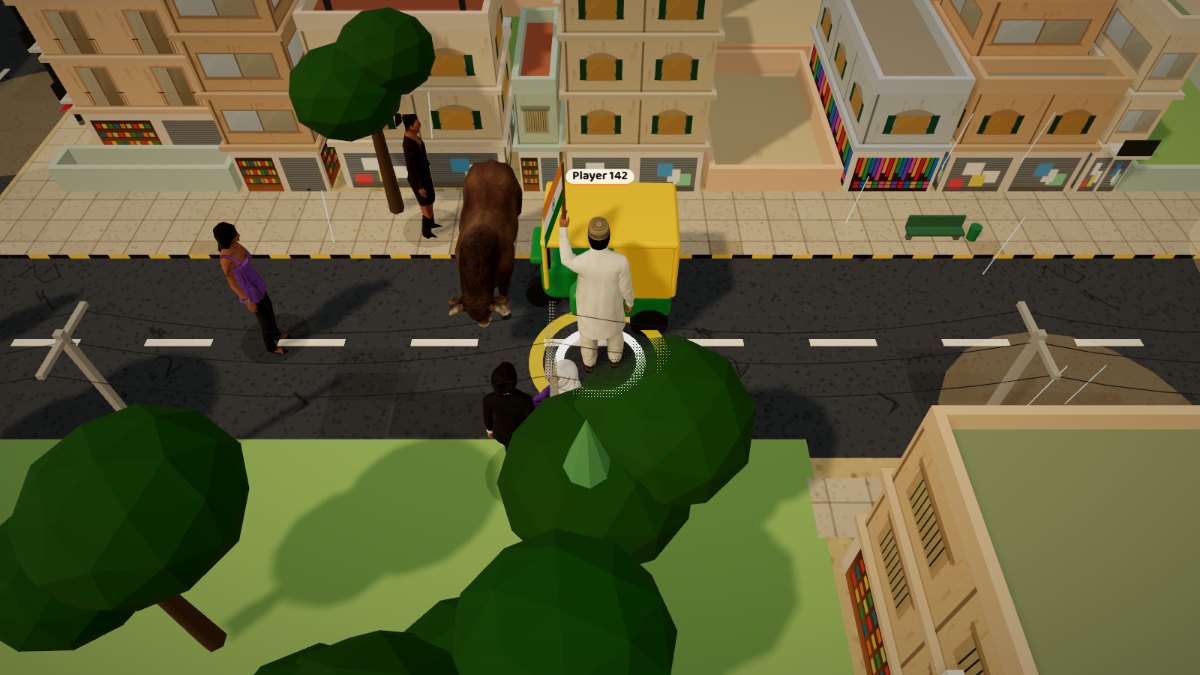
A new sky and busier streets
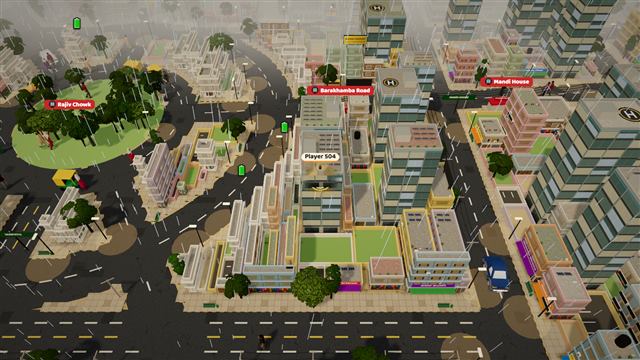
The people came last. Before them, the city got a sky that changes from morning to night, softer shadows and a glow on lights after dark. The buildings got balconies, AC units and little rooms on the roofs; the roads got kerbs, poles with sagging wires, benches and hoardings with joke ads like "Sarkari Form Kendra" and "Naukri Chahiye?".
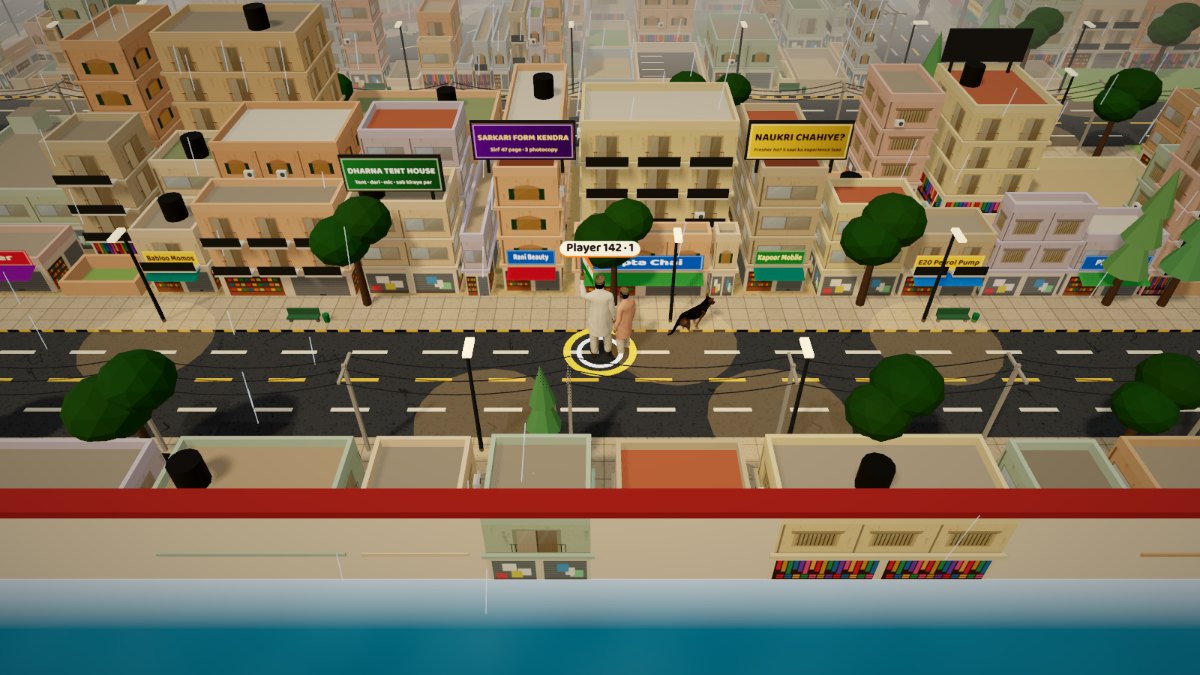
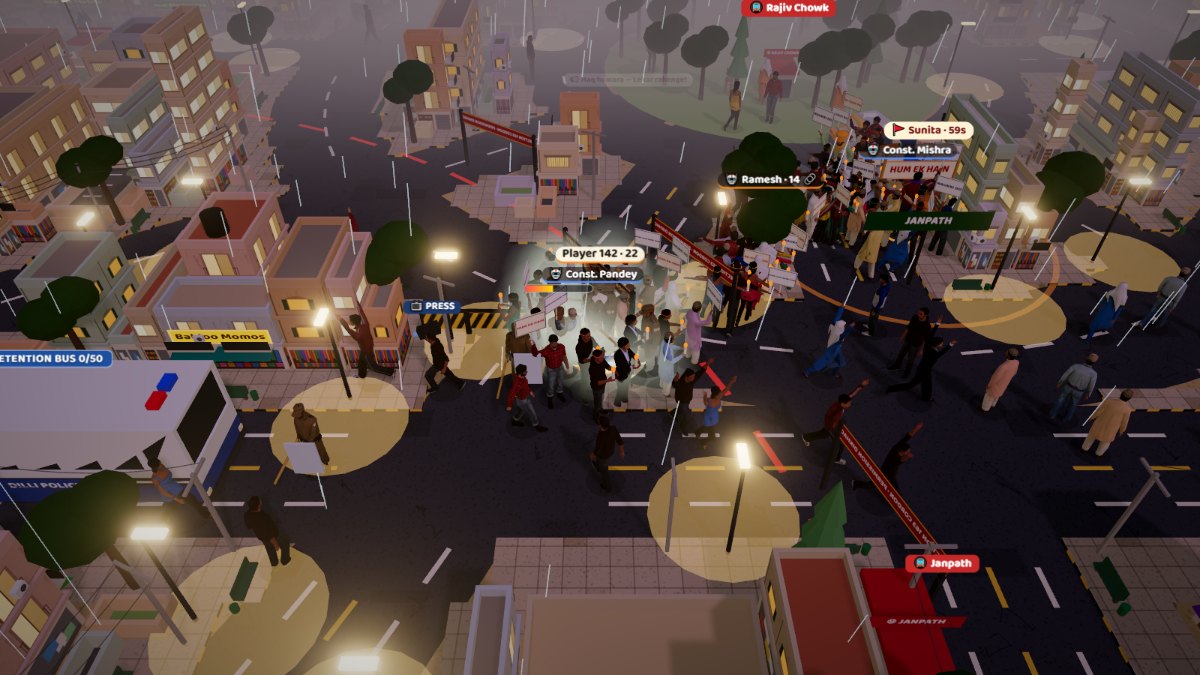
All of this costs a phone more than the old look did, so graphics now have four levels in ⚙️ Settings: Low, Medium, High and Ultra. Phones start on Medium and the real-looking people get smaller pictures on a phone, which look the same on a small screen. If the game stutters, it steps down a level by itself, and you can always choose your own. There is more about this in the phone guide.
What players spotted in the first days
Two things showed up as soon as the new look was out, and both are fixed:
- The placard was too high. A real person holds a placard with the arm straight up, so the board ended up far above the head, sometimes off the top of the screen. Now the elbow bends, the fist is by the head, the stick is shorter and the board a little bigger, with sharper writing.
- The old figure flashed on the menu. The new people take a few seconds to arrive the first time you open the game, and until then the menu showed an old blocky figure that suddenly turned into the new one. Now nobody is shown on the menu until the new people are ready. In a match nobody is ever missing: if they are not ready yet, the old figures stand in for that moment.
If something looks wrong to you, a person floating, a hat through a head, anything, send me a screenshot from the contact page. That is exactly how the two above were found.
Credits
The real-looking people and animals are from the Microsoft Rocketbox Avatar Library (MIT licence, © 2020 Microsoft), reduced, recoloured, reposed and animated for this game. The older 3D models are from Quaternius and Kenney, both public domain. Everything else, from the city to the rules, I made myself; you can read how in how I built the game.